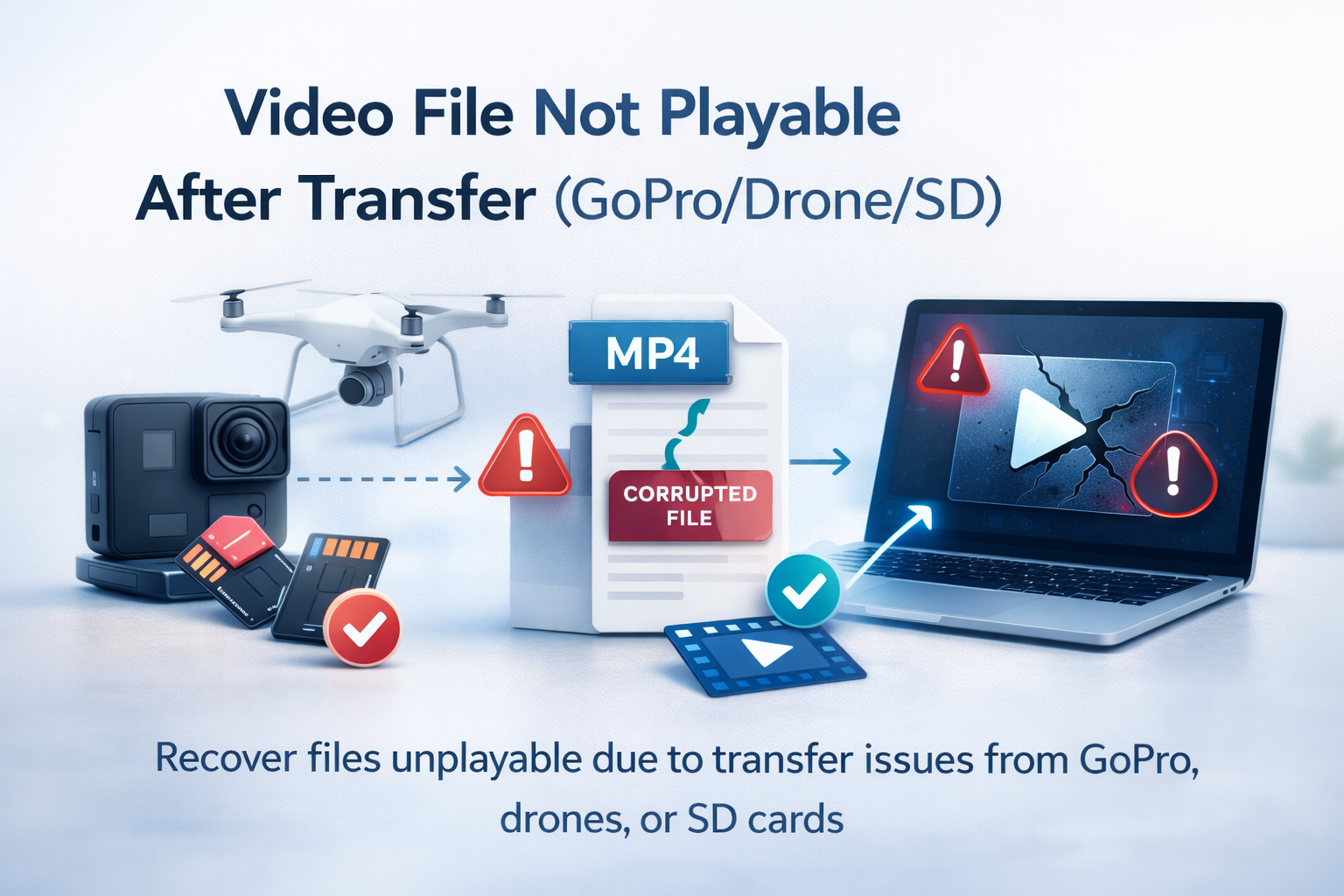
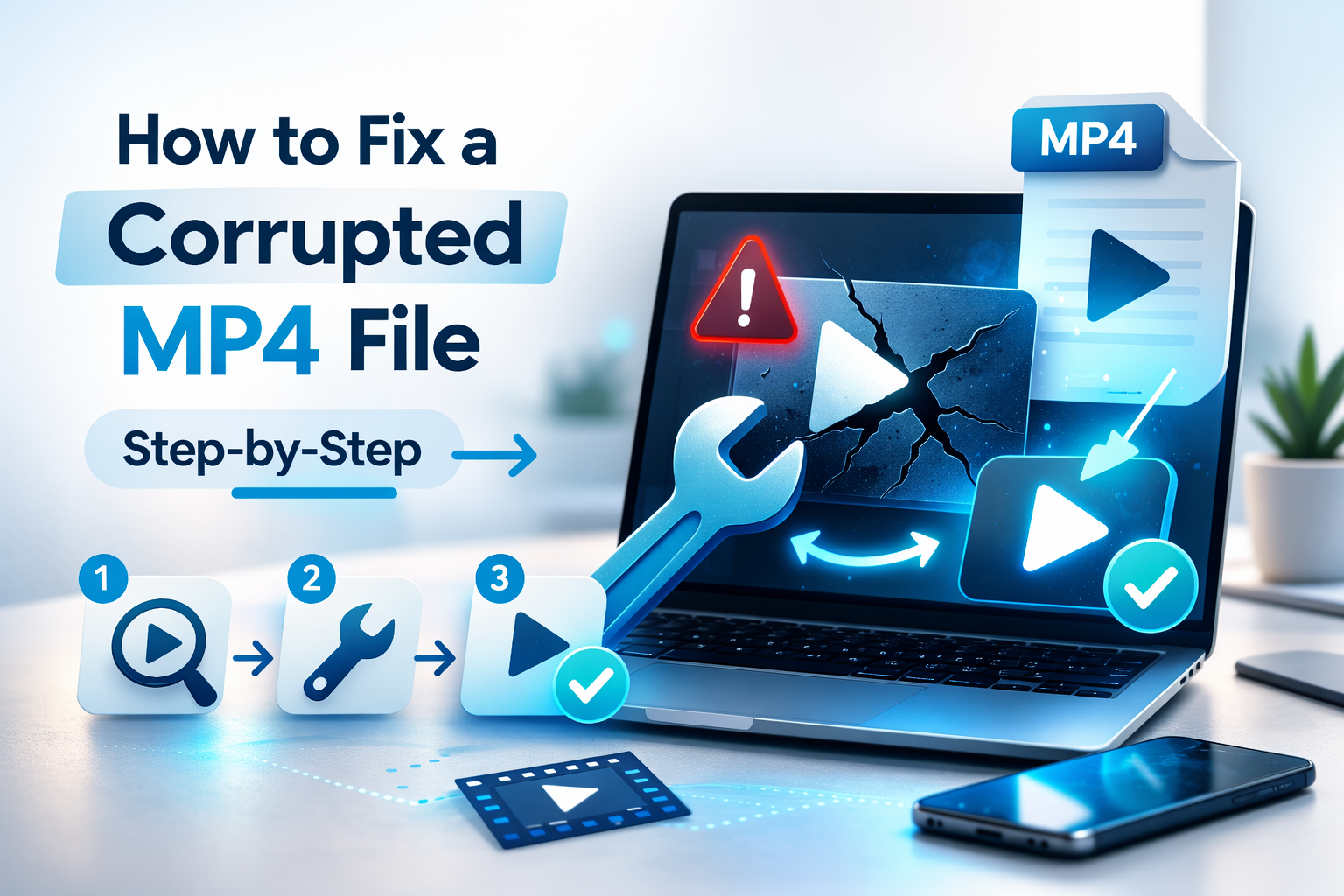
If your MP4 file won’t open, freezes, or shows a black screen, don’t panic. Corruption is common and often recoverable.
In this guide, you’ll learn how to diagnose a corrupted MP4 file and the fastest way to repair it.
Step 1: Identify the symptom
Look at what exactly is failing:
- The video does not open at all
- Audio plays, but no video appears
- Playback freezes after a few seconds
- Your player shows a “file is corrupted” error
Step 2: Verify the file transfer
Interrupted copy operations are one of the most common causes of corruption.
Compare the file size with the original source (camera card, phone, drone, or SSD).
Step 3: Test in multiple players
Try VLC, QuickTime, and another desktop player.
If one player opens it, your file may be mostly intact and the issue may be codec support rather than deep corruption.
Step 4: Repair the MP4 structure
When metadata or indexing data is damaged, playback breaks even if much of the media data still exists.
VideoRepair.app is built for this exact scenario: upload the broken file, run repair, and validate playback quickly.
Step 5: Prevent future corruption
- Never remove SD cards during recording
- Safely eject storage before unplugging
- Keep battery levels stable during capture
- Back up footage to two locations as soon as possible
FAQ
Can a corrupted MP4 always be fixed?
Not always, but many files are recoverable when the damage is in headers or metadata.
Will quality be reduced after repair?
In many cases, no visible quality loss occurs when repairing structure rather than re-encoding.
Ready to test your file? Try VideoRepair.app.